The pan series' collection post — publishing after #7 (Solidteknics). The full series comparison chart lands Nov 27, and this post's picks are three of its rows.
Every pan series needs one post that isn’t a single pan. This is that post: the cast iron wall in my kitchen, what's on it, why it earned the hook, and the three modern pans I'd add to it — clearly marked as picks, not possessions. Collections get reviewed with the same rules as single pans here: construction first, drawbacks in the open, and no pan named against a photo that doesn't show it.
The wall
The hero photo of this post is the wall itself — three pans hanging backs-out next to the cabinets, red light from the kitchen's LIFX bulbs at the edge of frame. I like backs-out for a collection shot because the back is where cast iron tells the truth. Reading top to bottom:
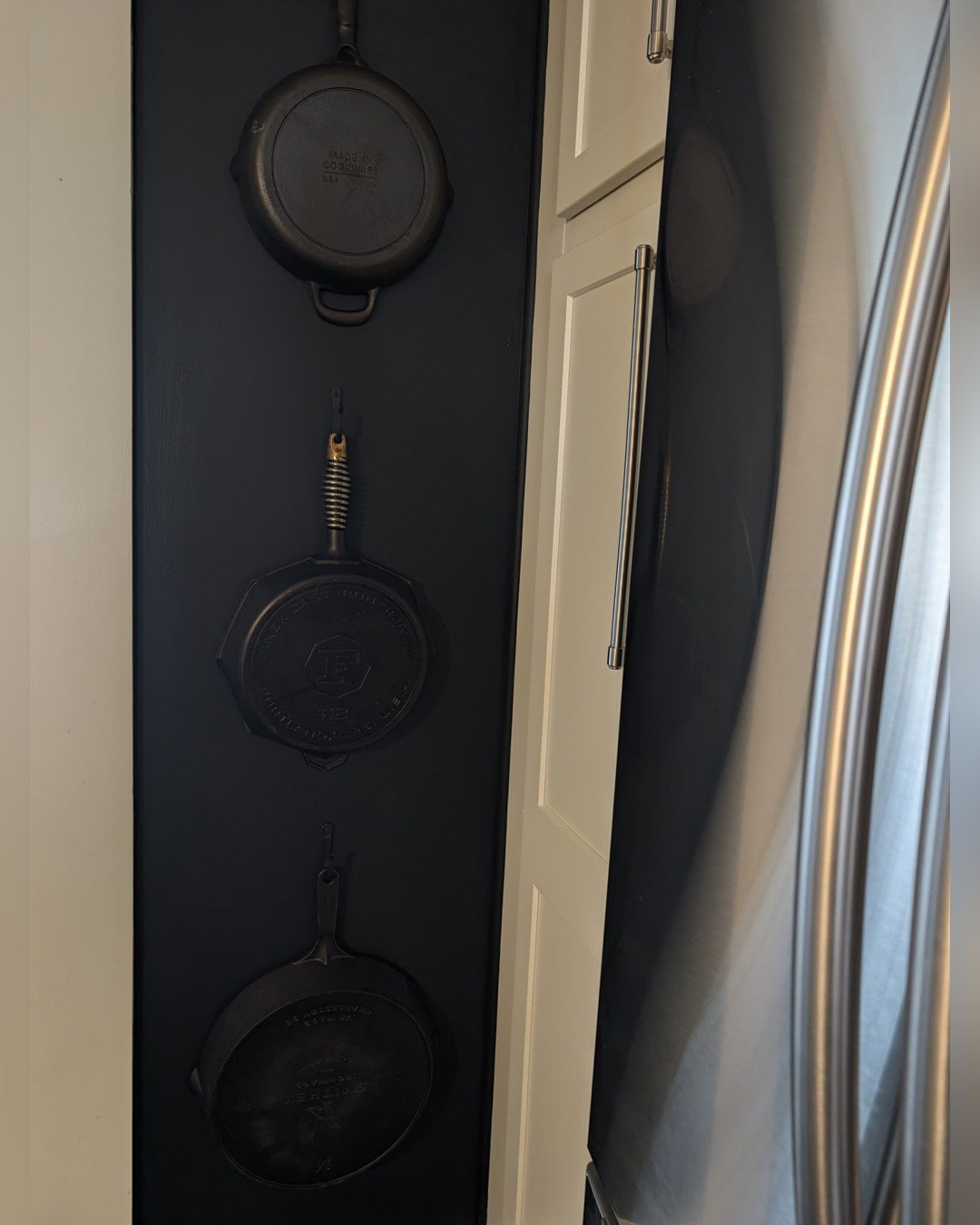
Top: Made In Cookware, USA, 10″. The base stamp is legible in the photo and it says 10 inches — so that's what this post calls it. This is Made In's seasoned cast iron skillet, the newest piece in the core; it joined the kit in a June 2026 order alongside their carbon steel grill pan. American-made, factory-seasoned, and the value play of the three: a modern smooth-ish iron from a big maker at production prices.
Middle: Finex, 12″. The decagonal body and the spring handle give it away before you read the base — "FINEX CAST IRON SKILLET, PORTLAND, ORE. USA," with the F mark and the 12. Finex machines its cooking surface smooth and charges accordingly; the geometry (those eight-plus sides) is for pouring and plating, and in practice it's the pan guests ask about.
Bottom: Smithey. The base markings read reversed in the photo — the pan hangs back-to-camera — but the Charleston foundry's farm scene and lettering are identifiable. This is my large cast iron: when a job wants maximum iron under maximum food, the Smithey is the pick, and it's the pick the finale chart carries.
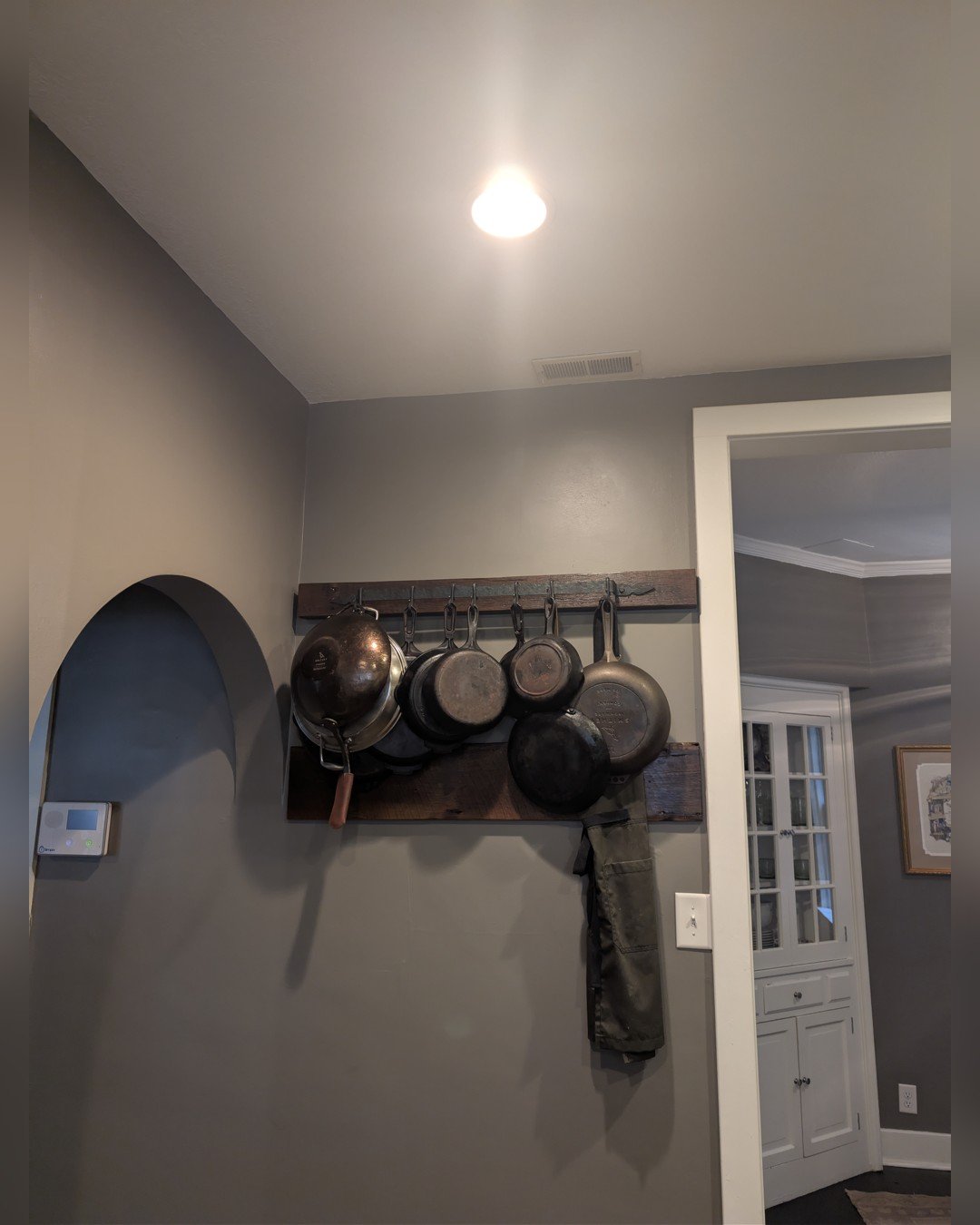
The wider rack shot that runs with this post shows the rest of the quiver — carbon steel, stainless, more iron, seven-odd pans on a wooden rail, apron underneath. No brands get named against that photo; at that distance nothing is legible, and this site doesn't guess.
Not on the wall, because it doesn’t hang: my Finex Dutch oven, which lives on a shelf and is my recorded pick for Dutch ovens — same foundry logic as the skillet, machined finish, and the piece that does the winter braises. It's discussed here as an owned pan on my word and the dossier's record; there's no photo of it in this post, and none is captioned as if there were.
The featured three — the modern smooth-iron field, not owned
A collection post earns its keep in this section. These are the three pans I point people to when they ask what modern cast iron to buy — my recorded picks, none of them in my kitchen yet, and no relationships with any of the makers.
Stargazer 12″ — my pick from the modern smooth-iron field. The process is the argument: traditional gray iron, US-sourced and mostly recycled, cast in one piece by green-sand casting, then the entire interior CNC-machined — that's where the smooth surface and the weight control (6.5 lb, 9.4″ of cooking surface, vintage #10 class) come from. Hand-finished in the Lehigh Valley, cast date stamped on the helper handle, lifetime warranty, 45-day returns. $175.
And the Craft-specific instruction, because it's the whole reason Stargazer leads this section: buy it bare. The seasoned version's factory finish is two coats of a canola, grapeseed, and sunflower oil blend. The bare pan is the same $175, shipped in a mineral-oil transit coat, and you build the seasoning yourself — in my kitchen that means tallow, which is how iron was seasoned for a century before seed-oil blends got cheap. Same price, your seasoning, no blend to cook off. The honest costs of the pick: machined modern iron runs 3–5× a rough commodity skillet, and at 6.5 lb you're trading some thermal mass for a pan you can actually move.
Field Company No. 8 — $165, 4.5 lb. American recycled iron, machined smooth, the lightest serious pan in this field. Field's bet is that cast iron's problem is weight, and the No. 8 is that bet at skillet size.
Lancaster Cast Iron — the small-shop end. Made in Lancaster, Pennsylvania; hand-seasoned; no PFAS or synthetic coatings; lifetime warranty; positioned on lightness. I quote no price here — Lancaster's pricing gets frozen from their own page when a dedicated piece runs, and a collection post doesn't import numbers it hasn't frozen. What earns Lancaster the slot is the shape of the company: another American shop betting that hand-finishing and a real warranty beat commodity casting.
What the six have in common — and the honest limits
American iron. Smooth cooking surfaces. No synthetic coatings anywhere. Warranties stated in lifetimes. That's not an accident; it's Benton's Rule applied to a material: the metallurgy is simple (it's iron), so the differentiators are process and longevity — how it's cast, how it's finished, and whether the maker stands behind it for decades.
The limits, stated once and plainly: the featured three are judged on process, record, and specifications — I have not cooked on them, and the scores they get in the Nov 27 chart are construction scores, marked as such. The owned core is judged on years of use. A chart that blends those without labeling them would be lying to you, so it won't.
The picks, for the chart
Large cast iron: Smithey (owned).
Stargazer 12″ — bought bare, seasoned in tallow (pick, not owned).
Dutch oven: Finex (owned).
Today's earlier installment went cast iron's opposite way: Solidteknics, iron wrought from a single sheet instead of poured into a mold — half the weight, nothing to crack, and an editorial judged entirely from the spec sheet, labeled as exactly that. The series continues Monday with Heritage Steel. Nov 27, the chart scores all of it.
