Thermal Mass and Forged Geometry: A Technical Teardown of Smithey Ironware
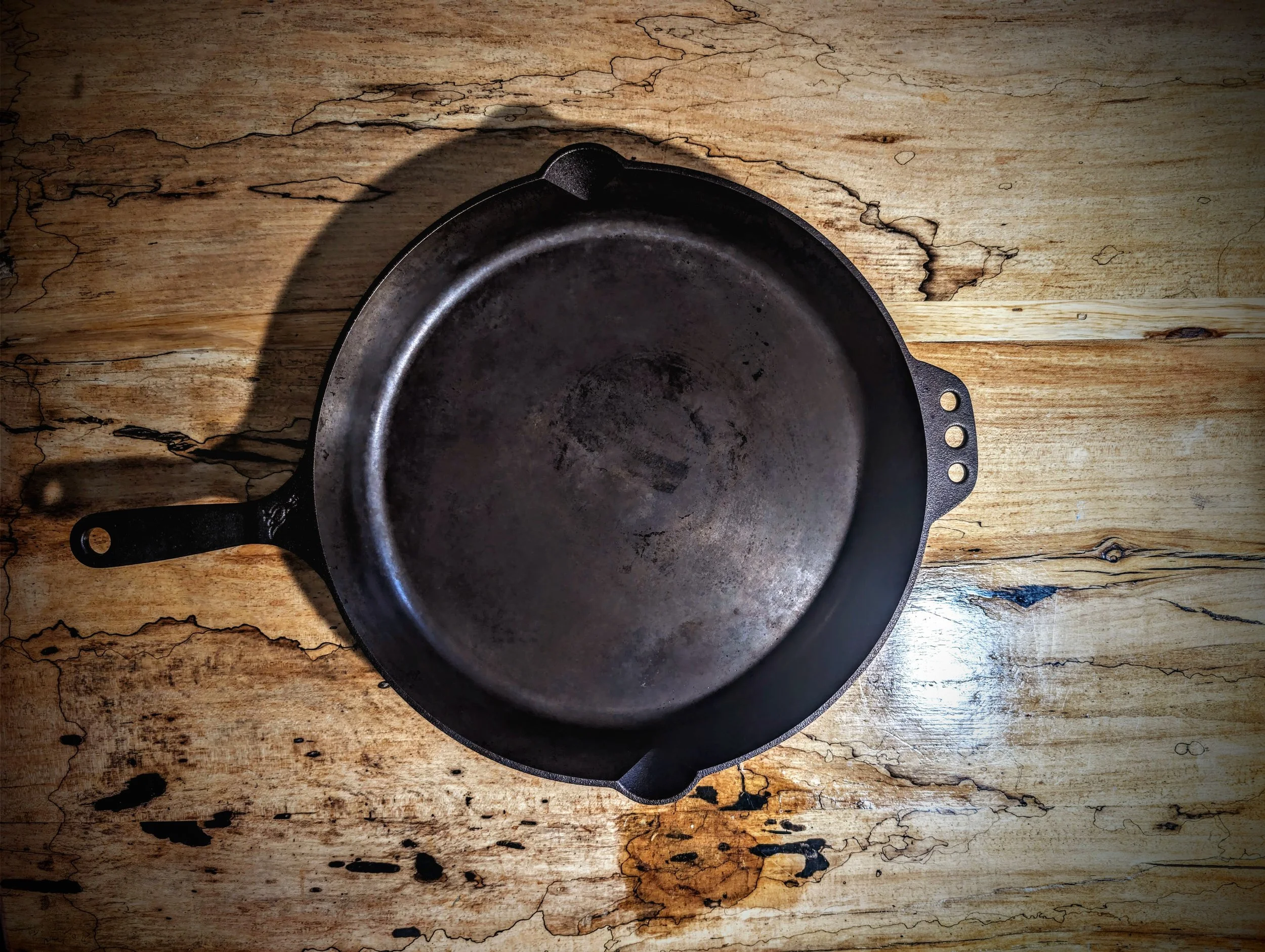
In the culinary sector, heat is not just a number on a dial—it’s a physical force you have to control. To push it around effectively, you need a vessel with serious structural integrity and enough thermal mass to absorb, store, and evenly distribute that energy without folding. That’s why, for well over a century, the real foundation of any serious professional or heritage kitchen has been heavy metal.
Let me be clear up front: Smithey isn’t the only solid player out there right now. The American iron revival has brought several strong manufacturers back, and I’ll probably tear down a few more down the road. But when I apply Benton’s Rule—judging strictly by metallurgy, material finish, process, and real-world utility—Smithey Ironware out of Charleston, South Carolina, is currently sitting at the top of my lineup.
They’re turning out modern heirlooms that combine industrial-grade performance with refined, functional craftsmanship. I run several of their pieces, but today we’re focusing on the workhorse: the big No. 14 Traditional Cast Iron Skillet, plus a close look at the hand-forged Farmhouse line.
The Heavy Artillery: The No. 14 Cast Iron Skillet
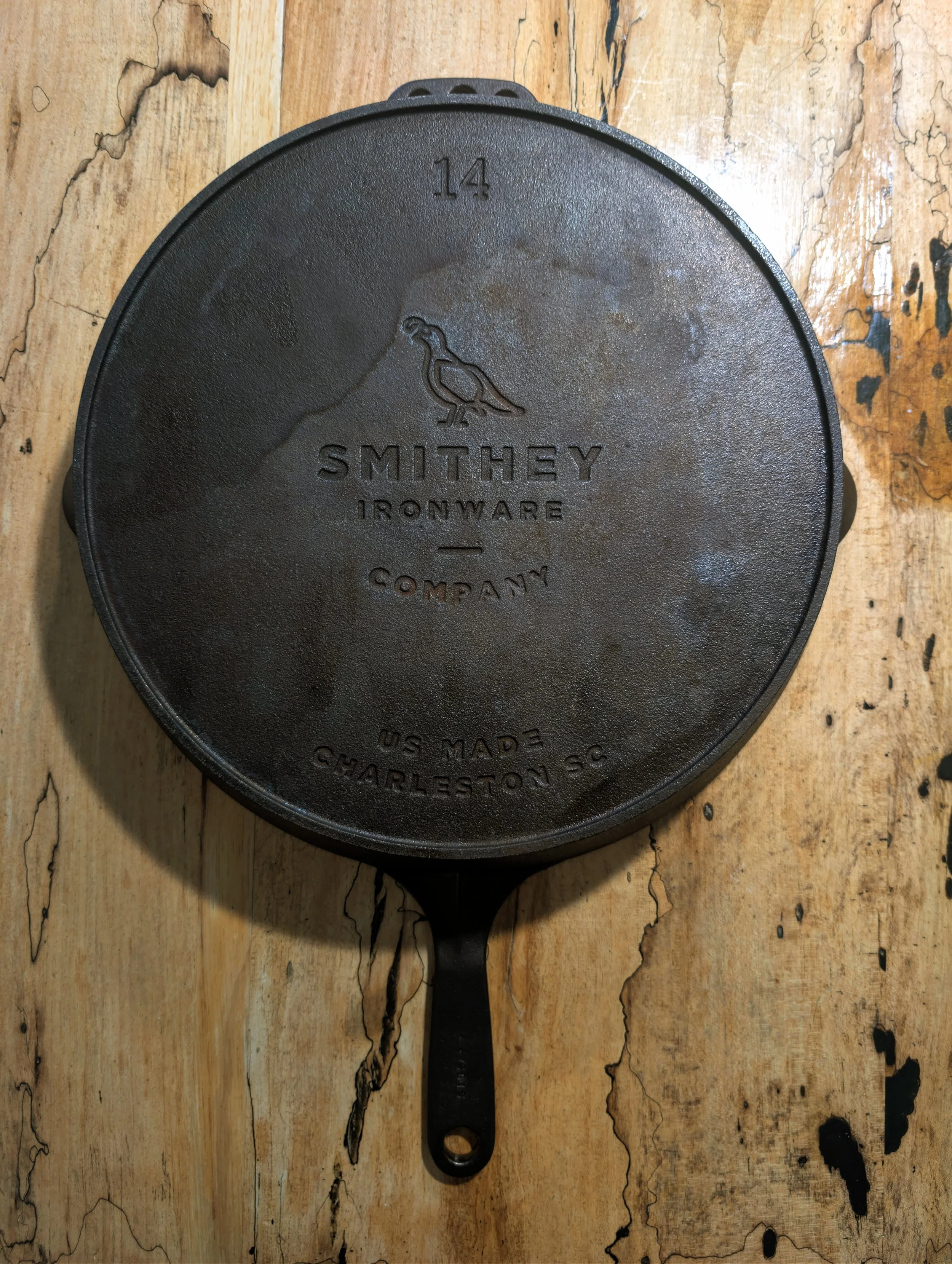
Most home cooks top out at a 10- or 12-inch skillet. When you’re feeding a crowd or running high-volume searing without crowding the pan, you need real deck space. The Smithey No. 14 delivers.
Raw specs on this thing:
Top diameter: 14 inches
Cooking surface: 11.5 inches
Depth: 2.2 inches
Handle-to-handle length: 20.3 inches
Weight: ±12 lbs
Twelve pounds of solid American-poured iron isn’t casual cookware. It’s a calibrated thermal battery. Drop two big, cold bone-in ribeyes on a thin aluminum pan and the temperature crashes—the pan doesn’t have the mass to recover, so you end up with grey, steamed meat instead of a crust.
On the preheated Smithey, the temperature barely flinches. That thermal mass powers straight through the cold load and kicks off a hard Maillard reaction right away. The iron dominates the protein instead of surrendering to it.
The Machined Interior: Fixing What Most Modern Cast Iron Gets Wrong
The biggest failure point on cheap mass-market cast iron is the cooking surface. To save money and speed up production, most brands skip final machining and leave the interior feeling like 80-grit sandpaper.
Smithey does it the old-school way. They pour the molten iron into sand molds, then send the raw castings through precision machining and polishing steps in their Charleston shop. The result is a satin-smooth interior that mimics the best vintage pieces from the late 1800s and early 1900s. Lower friction coefficient means once you build a proper polymerized seasoning layer, the surface becomes naturally non-stick. Eggs slide. Fish skin releases clean. You get the heat-soaking power of a heavy engine block with release performance that rivals modern coatings—all from geometry and metallurgy, no chemicals required.
Structural Critique: The Leverage Problem
I’m not here to wave pom-poms. If you push hardware hard, you’ll find its weak spots. With the No. 14, the primary stick handle is my one real operational nitpick.
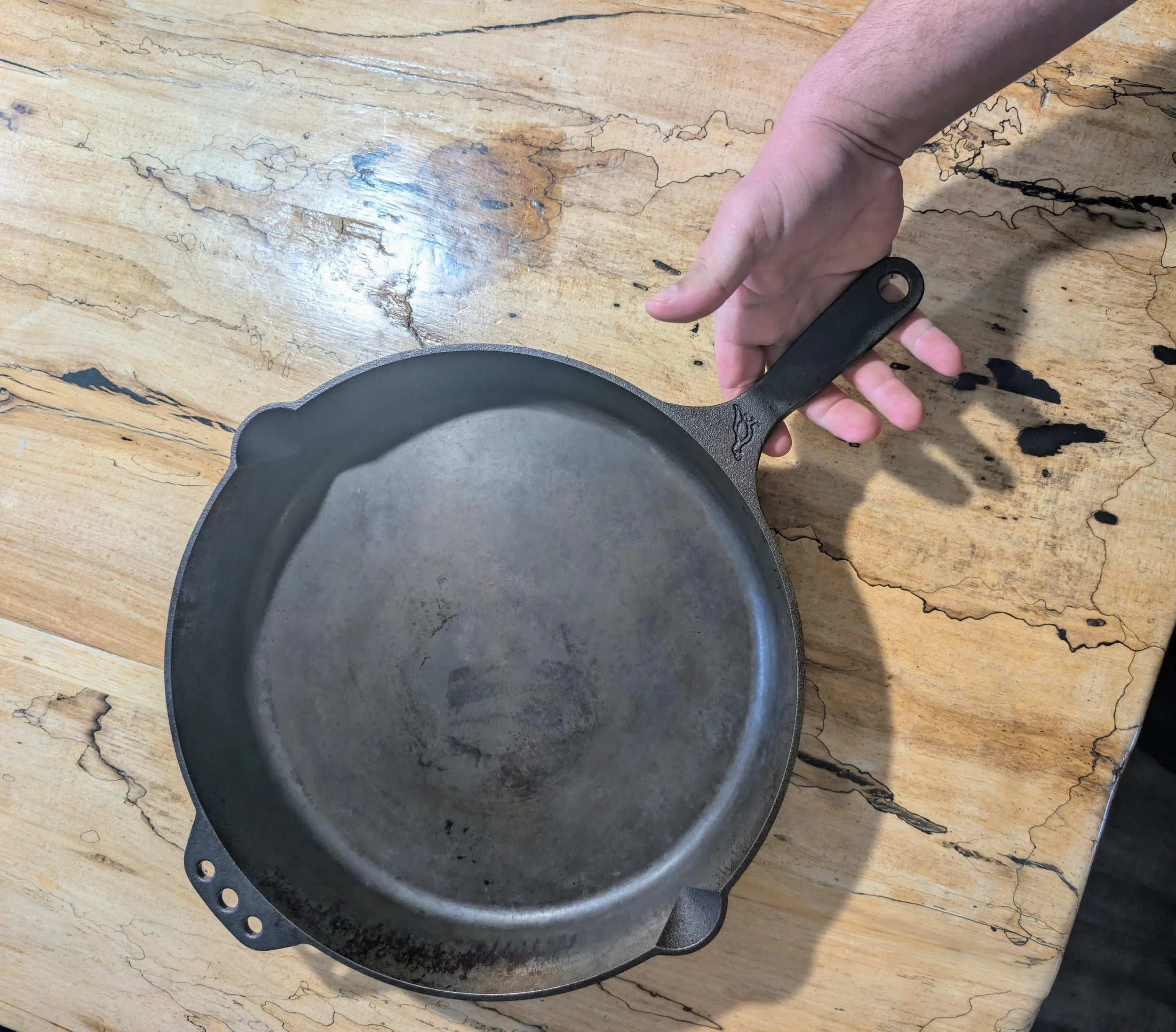
Twelve pounds of iron plus food and oil creates a serious lever arm. At 500 degrees, wearing a thick leather mitt, the handle feels a little undersized for one-handed torque. It’s not unworkable, but it could use more ergonomic volume for that much mass.
Smithey built a smart workaround: the wide, three-holed helper handle opposite the main stick. It turns awkward one-handed wrestling into a stable two-handed deadlift. Moving a screaming-hot, loaded No. 14 from stove to oven to table becomes mechanical instead of a wrist gamble.
They also put deep, sharply angled pour spouts on both sides. When you’re rendering tallow or lard and need to transfer hot fat cleanly into a storage vessel, these spouts actually work. No running down the side, no flare-ups on the burner—just controlled, dripless pouring.
The Responsive Alternative: The Farmhouse Skillet
The No. 14 is my thermal sledgehammer. When I need precision and speed, I reach for the Farmhouse line.
These aren’t sand-cast. They’re hand-forged by blacksmiths in Charleston from US-sourced carbon steel. Metallurgically, carbon steel seasons the same way cast iron does—polymerized fats create a tough, naturally non-stick surface that improves with use and shares the same legendary durability.
The difference is density and responsiveness. Carbon steel is stronger by volume, so the pans can be forged thinner and lighter (around 5 lbs for a 12-inch) without sacrificing strength. Where the big cast iron takes time to heat up and even longer to cool, the Farmhouse drops temperature almost immediately when you cut the burner. That makes it perfect for delicate work: building a pan sauce, searing thin fillets, or quick sauté moves that need constant heat adjustment and fast pan action.
The craftsmanship is raw and honest. Every piece gets hammered on an anvil, so no two are identical. The hammer marks give it a dark, rugged texture that looks straight out of a 19th-century frontier kitchen but performs with modern precision. The handles draw from traditional fire tools, locking in that “Modern Guild” feel—heritage craft built for daily heavy use.
The Verdict on Utility
Under Benton’s Rule, tools get judged on longevity, materials, and process.
A standard aluminum non-stick is a consumable. The coating scratches, flakes, and ends up in the landfill in three to five years. Planned obsolescence.
Smithey pieces are intergenerational. The seasoning on both the cast iron and carbon steel only gets harder and slicker with decades of use. They offer a lifetime guarantee, but honestly, you probably won’t touch it unless you do something stupid like drop it off a roof or soak it in acid. The metal will outlast you, your stove, and probably the house.
Buying a Smithey isn’t grabbing a kitchen gadget. It’s adding a heavy-duty, precisely calibrated thermal tool to your setup. The No. 14 handles commercial-level workloads with its mass. The Farmhouse gives you quick response for finesse work. Both are built to stay in the family.
If you’re serious about controlling heat, quit buying disposable pans and invest in heavy metal that actually earns its keep.
Operational Transparency / Sourcing Note: At the time of this write-up I don’t have an active affiliate relationship with Smithey Ironware, though I’m in the process of setting one up. Doesn’t change anything. This is straight Benton’s Rule—metallurgy, materials, process, and proven longevity on the line. Smithey is the current standard in this category, commission or no commission.
