Bypassing the Block: The Methylene Blue Electrical Override
In mechanical engineering, when a primary circuit fails, you do not simply stare at the dead machine and accept the downtime. If the wiring harness is compromised and the signal is not reaching the actuator, you build a bypass. You run a jumper cable directly from the power source to the final terminal, bypassing the damaged relays, and you force the machinery to turn over.
Over the past three years of rebuilding my biological chassis and driving my hs-CRP levels down to 0.5 mg/L, I have applied this exact engineering principle to my own cellular architecture.
In a previous technical teardown, I detailed my use of Coenzyme Q10 as a spark plug to mitigate the mitochondrial dysfunction caused by Systemic Lupus Erythematosus (SLE). CoQ10 is a highly effective, standard-issue fuel additive. But sometimes, standard maintenance isn’t enough. When the internal electrical grid is fundamentally compromised by an autoimmune misfire, you have to look beyond standard nutrition and reach for heavy-duty chemical workarounds.
Enter Methylene Blue.
This is not a supplement. It is a highly potent, fully synthetic metabolic jumper cable. It is one of the most mechanically fascinating, universally misunderstood, and operationally dangerous tools in my tactical reserve. When sourced correctly and calibrated with precision, it forcefully overrides cellular fatigue. When deployed recklessly, it is highly toxic.
Here is the complete operational schematic for Methylene Blue, why it is a non-negotiable tool in my autoimmune stack, and exactly how to implement it without catastrophically flooding your system.
1.0 Operational Disclaimer
Before proceeding into the technical teardown of this compound, a strict operational boundary must be established.
I am a service technician and a former professional butcher. I am not a physician, a pharmacist, or a biochemist. The documentation provided below is an open-source maintenance log of my own biological troubleshooting. It is explicitly not medical advice. I am detailing the specific compounds, dosages, and mechanical rationales that keep my personal engine running clean.
Attempting to blindly copy and paste my exact biochemical protocols onto your own chassis without conducting your own telemetry, bloodwork, and medical consultation is a dangerous miscalculation—especially with a compound as powerful as Methylene Blue. It has severe, potentially fatal contraindications with SSRIs (antidepressants) due to the risk of serotonin syndrome. Use this data as a structural blueprint to ask better questions of your own medical providers, not as a prescriptive manual to treat illness.
2.0 The Heritage: From Textile Mill to the Pharmacy

Applying Benton’s Rule—the philosophy that we judge a tool by its materials, process, and legacy—Methylene Blue holds an incredibly unique position. It is technically the world’s first fully synthetic pharmaceutical drug.
Its origins, however, are not medical. It was synthesized in 1876 by a German chemist named Heinrich Caro as an aniline dye for the textile industry. It was designed to permanently stain cotton and wool a deep, brilliant blue.
By the late 19th century, scientists realized that this industrial dye had highly specific biological affinities—it possessed the ability to penetrate living tissue and stain specific cellular structures without killing the host organism. This led to its deployment as the first effective synthetic treatment for malaria. During World War II, it was issued to Allied troops in the Pacific theater as an antimalarial prophylactic.
Today, it sits on the World Health Organization’s List of Essential Medicines. In modern trauma centers and emergency rooms, intravenous Methylene Blue is the primary, frontline antidote for methemoglobinemia (a condition where the blood loses its ability to carry oxygen, often induced by chemical exposure) and severe carbon monoxide poisoning.
If you present to an ER suffocating at the cellular level, they inject you with textile dye to restart your engine. The mechanics of exactly how it does this are what make it the ultimate biohacking tool for chronic fatigue and autoimmune dysfunction.
3.0 The Friction Point: Lupus and the Electron Transport Chain
To understand why Methylene Blue is necessary, you have to understand exactly how the machine fails.
Human energy is not a vague, holistic concept. It is a hard, measurable, chemical currency called Adenosine Triphosphate (ATP). ATP is manufactured inside the mitochondria—the microscopic power plants residing within almost every cell in your body.
Inside the inner membrane of these power plants is an assembly line called the Electron Transport Chain (ETC). The ETC consists of five distinct mechanical stations, designated as Complex I, Complex II, Complex III, Complex IV, and Complex V (ATP Synthase).
Under optimal operating conditions, electrons from the food you eat are stripped down and fed into Complex I and Complex II. These electrons are then passed down the line like an electrical current, jumping to Complex III, and then to Complex IV. As the electrons jump down this chain, they generate the voltage necessary to pump protons across a membrane. Finally, this pressurized proton gradient flows through Complex V, physically turning a microscopic biological turbine to synthesize ATP.
If this chain operates smoothly, your engine runs clean, your cognitive processing is sharp, and your physical output is limitless.
The Autoimmune Short Circuit:
Systemic Lupus Erythematosus (SLE) is traditionally viewed as a disease of the immune system. But structurally, it is a disease of mitochondrial degradation.
The chronic, systemic inflammation generated by Lupus specifically damages the hardware of the Electron Transport Chain. Clinical telemetry indicates that Lupus inflicts structural blockades primarily at Complex I and Complex IV (Cytochrome C Oxidase).
When Complex I is damaged, it cannot efficiently accept electrons from your fuel. The engine stutters. When Complex IV is damaged, it cannot pass the electrons off to oxygen at the end of the line. The current backs up.
When electrons back up in the chain, they leak out into the surrounding cellular fluid. This leakage generates massive amounts of Reactive Oxygen Species (ROS)—which is essentially internal, cellular rust. This causes a devastating positive feedback loop: the blocked chain lowers ATP production (causing crushing, heavy-limbed fatigue) while simultaneously generating rust (which triggers more inflammation, further damaging the joints and the mitochondria).
When your engine is fundamentally incapable of processing fuel through Complex I and Complex IV, sleeping for twelve hours will not fix the fatigue. No amount of caffeine will clear the brain fog. You have a blown fuse in the primary circuit.
4.0 The Override: How Methylene Blue Acts as a Jumper Cable
This is where the synthetic dye completely rewrites the biological schematic.
Methylene Blue is an autoxidizing agent. Mechanically, this means it has the unique chemical ability to easily accept electrons and easily donate them. It can cycle endlessly between an oxidized state (where it is bright blue) and a reduced state (where it becomes colorless, known as leucomethylene blue).
When you ingest highly calibrated, micro-dosed Methylene Blue, it rapidly crosses the blood-brain barrier and penetrates directly into the mitochondria.
Because it is an electron carrier, it recognizes the blockages in the damaged Electron Transport Chain, and it physically acts as a bypass circuit. If Complex I is damaged and refusing to process electrons, Methylene Blue intercepts the current. It absorbs the electrons, completely bypasses the stalled complexes, and donates those electrons directly to Complex III and Complex IV.
It literally acts as a jumper cable, restoring the electrical voltage of the mitochondria.
By restoring the current, it completely reverses the Lupus-induced energy deficit. ATP production skyrockets. Simultaneously, because it is intercepting the leaking electrons that would normally cause cellular rust, it acts as an incredibly potent, deep-tissue antioxidant.
The result is a radical, highly noticeable shift in operational capacity. The heavy-limbed systemic fatigue lifts. The cognitive fog clears. Processing speed increases. The engine comes back online because you have forcefully hotwired the alternator.
5.0 Diagnostic Exhaust: Reading the Biological Telemetry
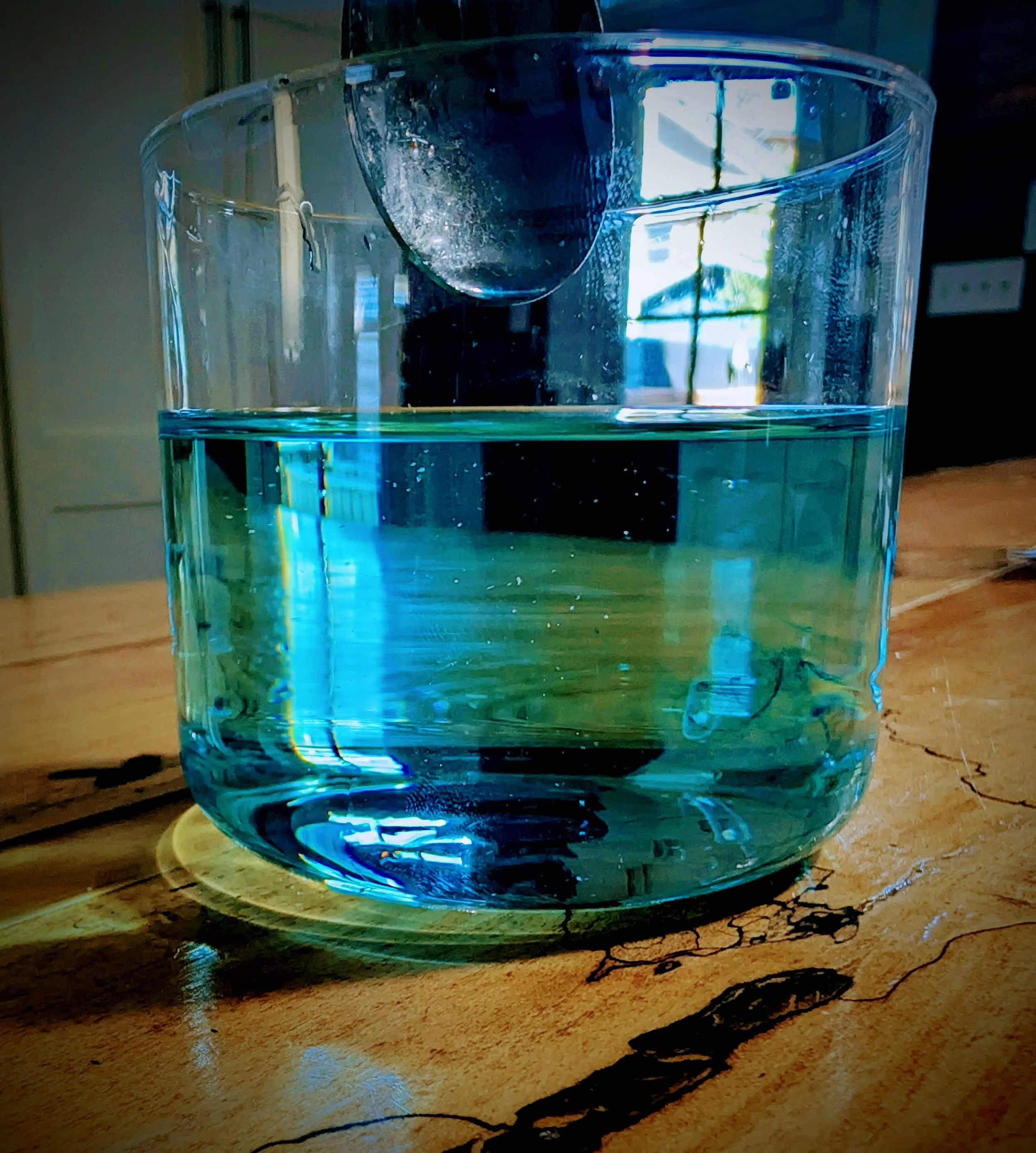
In any mechanical system, you can diagnose the efficiency of the combustion cycle by examining the exhaust. The human body is no different. When you deploy Methylene Blue, you gain an immediate, highly visible diagnostic read on your cellular redox state via your urine.
Because it was originally a textile dye, Methylene Blue will radically alter the color of your urine. This is a harmless, expected operational output, but the exact color provides direct telemetry on how the compound was metabolized.
As mentioned, the compound cycles between an oxidized state (Methylene Blue, which is blue) and a reduced state (leucomethylene blue, which is entirely colorless).
When the compound is excreted by your kidneys and hits the toilet bowl, you will observe one of two things:
Blue/Green Exhaust: Human urine contains a natural yellow pigment called urobilin. If your body excretes the compound in its oxidized, blue state, the blue dye mixes with the yellow urobilin, resulting in a striking, neon green or blue-green exhaust. This confirms the compound cycled through the system and is being flushed in its base oxidized form.
Clear/Yellow to Blue (The Oxygen Test): If your cells successfully utilized the compound to buffer a massive electron load, it may be excreted primarily in its reduced, colorless state (leucomethylene blue). When this happens, your urine will initially look normal. However, because leucomethylene blue is highly reactive with oxygen, the moment that urine sits in the bowl and is exposed to the ambient air, it will rapidly oxidize and turn blue before your eyes.
This visual shift is literal biological telemetry confirming the electron exchange was executed successfully at the cellular level.
6.0 The Photomodulation Conflict: The Singlet Oxygen Bomb
In the tactical reserve, Red Light Therapy (RLT) and Methylene Blue are two of the most powerful tools for mitochondrial optimization. However, combining them recklessly is a catastrophic operational error.
For me, this error is exponentially amplified by my specific biological baseline.
The commercial biohacking space often suggests taking Methylene Blue and immediately standing in front of a Red Light panel to "supercharge" the effect. For an individual with a highly resilient, healthy biological baseline, mixing MB and red light might be an acceptable stressor. For someone managing Lupus, it is a trigger for a massive systemic flare.
Here is the underlying physics: In the clinical medical field, the combination of Methylene Blue and targeted red light is a specific procedure known as Antimicrobial Photodynamic Therapy (aPDT). When Methylene Blue is exposed to highly concentrated red/near-infrared light, it acts as a photosensitizer. It absorbs the photons and uses that massive energy spike to generate an explosive surge of "singlet oxygen"—an incredibly destructive, highly reactive form of Reactive Oxygen Species (ROS). Clinics use this exact mechanism to blow up the cell walls of drug-resistant bacteria.
Lupus patients already exhibit chronic oxidative stress. We have elevated baseline ROS, severely impaired antioxidant defenses (like reduced glutathione activity), and known mitochondrial dysfunction in our immune cells. Furthermore, Lupus carries an inherent photosensitivity threshold.
If I ingest a systemic photosensitizer like Methylene Blue, and then subject my entire chassis to high-intensity Red Light Therapy while the dye is in my bloodstream, I am not "supercharging" my ATP. I am creating a systemic oxidative bomb. I am over-exciting Complex IV, tipping my precarious cellular redox balance into a state of sheer panic, and forcing my body to generate the exact lipid peroxidation and DNA oxidation I am actively trying to eliminate.
The Staggered Calibration:
Because I am intensely cautious about how singlet oxygen interacts with my compromised immune system, I strictly stagger these interventions. If I deploy Methylene Blue as a daytime cognitive and energy buffer, I explicitly restrict my use of Red Light Therapy until the compound has completely cleared my system (requiring a minimum window of 6 to 8 hours, often longer). You cannot plug a 220-volt appliance into a 110-volt socket, hit it with a power surge, and expect the wiring to survive.
7.0 Sourcing Parameters: The USP Grade Mandate
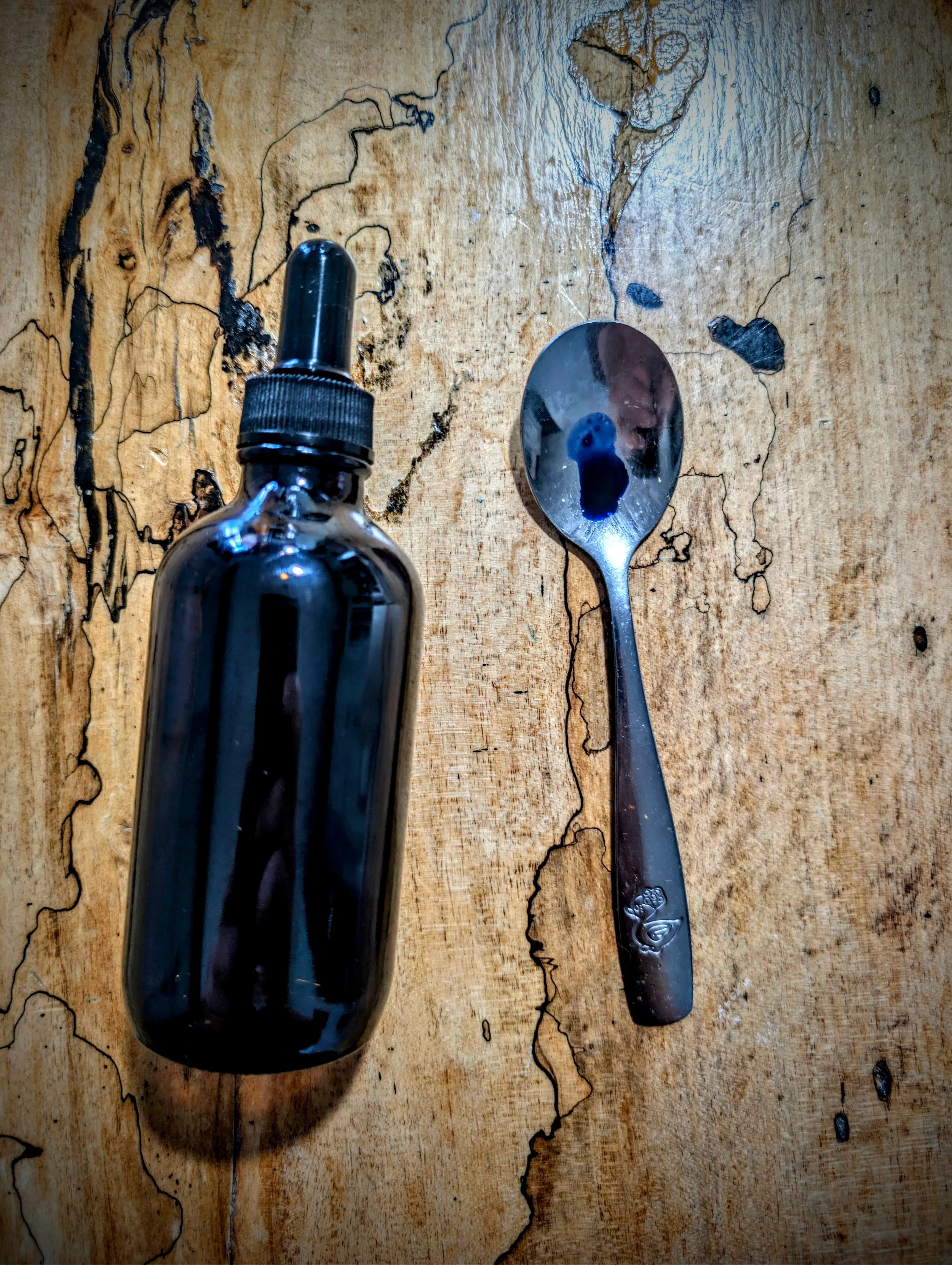
Because Methylene Blue originated as an industrial textile dye, the modern supply chain is an absolute minefield.
There are three grades of Methylene Blue available on the global market:
Industrial/Chemical Grade: Used for dying jeans and staining wood.
Laboratory Grade: Used for staining microscope slides.
USP Grade (United States Pharmacopeia): Certified for human medical consumption.
The manufacturing process required to synthesize Methylene Blue inherently relies on heavy metals. If you purchase Industrial or Laboratory grade Methylene Blue—which is incredibly cheap and easily found online—it is heavily contaminated with arsenic, lead, cadmium, and aluminum.
If you ingest anything less than verified, >99% pure USP Grade Methylene Blue, you are actively poisoning your central nervous system with heavy metals.
Finding reliable, transparent sellers of true USP Grade Methylene Blue is incredibly difficult. The market is flooded with counterfeit products and fly-by-night operations on massive retail sites selling "aquarium grade" solutions (used to treat fungal infections in fish tanks) disguised as human supplements.
8.0 The DIY Protocol vs. The Outsourced Solution
For the first two years of utilizing this compound, I engineered it myself.
Because I refuse to trust liquid solutions from unverified third-party vendors, I sourced raw, powdered USP Grade Methylene Blue from a verified chemical supply house.
Making a safe, 1% liquid solution at home requires a strict laboratory protocol. It is not something you casually mix in a coffee mug. The raw powder is so highly concentrated that a single errant speck will permanently stain your countertops, your skin, and your clothing an aggressive, indelible blue.
The DIY Architecture:
You must utilize an analytical precision scale capable of measuring down to the milligram. You precisely measure out 1 gram of the USP powder. You transfer this into a borosilicate glass beaker. You add exactly 100ml of pure, laboratory-grade distilled water. To ensure the chemical completely dissolves and homogenizes without leaving highly concentrated, toxic clumps at the bottom, you must use an industrial magnetic hotplate stirrer. You drop a Teflon-coated magnetic pill into the beaker, turn on the magnetic field, and let it spin into a vortex for thirty minutes. Finally, you carefully funnel the liquid into amber glass dropper bottles, because Methylene Blue is highly photosensitive and will degrade if exposed to ambient UV light.
It is a tedious, messy, and highly exact process. If your math is wrong, or your scale is improperly tared, you risk a massive overdose.
The Modern Guild Solution: Meraki Medicinal
Eventually, the operational friction of operating a chemistry set in my kitchen outweighed the utility. I needed a reliable, transparent manufacturer who possessed the cleanroom architecture and the analytical testing to do the heavy lifting for me.
This is why I shifted my supply chain to Meraki Medicinal.
Applying Benton’s Rule, Meraki operates exactly how a high-end guild should. They are a USA-based operation, which is incredibly rare and highly unique in a supplement industry that outsources the vast majority of its liquid manufacturing to overseas chemical plants with zero regulatory oversight.
They source verifiable, ultra-pure USP Grade Methylene Blue. They handle the precision liquid suspension. They bottle it in the requisite light-blocking glass. It arrives as a fully stabilized, ready-to-deploy 1% solution, complete with a calibrated dropper, completely bypassing the need for magnetic stirrers, precision scales, and stained countertops.
It is the exact, pure hardware required to jumpstart the Electron Transport Chain, processed and packaged by a domestic operation that actually adheres to pharmaceutical tolerances.
9.0 Final Calibration
Methylene Blue is not a daily multivitamin. I do not care if the current wellness trend is showing off a blue tongue on social media. It is a highly specific, tactical intervention.
When the structural fatigue sets in, and when the mitochondria are fundamentally failing to convert fuel into voltage, this is the override switch. It forces the engine to turn over. Respect the physics, stagger your light therapies, monitor your biological exhaust, demand USP purity, and never guess your dosage.
Operational Transparency / Sourcing Note: Because I mandate domestic, highly transparent manufacturing for critical chemical interventions, I rely on Meraki Medicinal for my Methylene Blue supply.
If you need to secure this hardware for your own tactical reserve, you can source it directly through their primary distribution node: Meraki Medicinal Procurement
You can apply the operational code CALLMETHE__GOAT at checkout to execute the transaction.
Affiliate Disclosure: I receive a commission for purchases made through the link and code provided above. Under the strict parameters of Benton’s Rule, I recommend hardware based purely on metallurgy, materials, process, and real-world longevity. Meraki Medicinal meets the absolute highest standard for domestic USP sourcing. It is the required standard, and I mandate its use whether it currently yields a commission or not.
