The Tactical Reserve: Modular Interventions and Biological Troubleshooting
If you view the human body as a complex mechanical chassis, your baseline daily nutrition is your standard operating fuel. For my specific biological machinery, that baseline is secured through heavily vetted, transparent inputs like the IM8 protocol. It stabilizes the system, provides the requisite micronutrients, and establishes a highly functional floor.
However, no machine operates in a vacuum. Environmental variables shift. System loads increase. Biological threats are introduced. When the operational parameters of your life deviate from the ideal baseline, relying solely on standard maintenance is a failure of adaptation. You must have the capacity to deploy targeted, modular interventions to troubleshoot acute friction points.
This is my Tactical Reserve. It is a secondary tier of heavily researched, precision-dosed compounds that I cycle in and out of my protocol based on real-time telemetry. These are not daily baseline requirements; they are specific mechanical adjustments deployed to handle sleep deprivation, mitochondrial dysfunction, autoimmune flares, and acute biological stress.
1.0 Operational Disclaimer
Before proceeding into the technical teardown of these inputs, a strict operational boundary must be established.
I am a service technician and a former professional butcher. I am not a physician, a pharmacist, or a clinician. The documentation provided below is an open-source maintenance log of my own biological troubleshooting. It is explicitly not medical advice. I am detailing the specific compounds, dosages, and mechanical rationales that keep my personal engine running clean.
Attempting to blindly copy and paste my exact biochemical protocols onto your own chassis without conducting your own telemetry, bloodwork, and medical consultation is a dangerous miscalculation. Biology is highly individualized. What operates as a precision lubricant in my system may cause catastrophic misfires in yours. Use this data as a structural blueprint to ask better questions of your own medical providers, not as a prescriptive manual to treat illness.
2.0 The ATP Buffer System: Creatine Monohydrate (5–10g)
We must first dismantle the prevailing, deeply flawed commercial narrative surrounding creatine. The fitness industry has successfully pigeonholed creatine monohydrate as a hyper-specific tool utilized exclusively for adding water weight to skeletal muscle and marginally increasing mechanical torque in a gym setting. This is a profound underutilization of the compound.
At its core, creatine is an energy buffer for the central nervous system. It is fundamental neurocognitive fuel.
The human brain accounts for roughly 2% of your total body mass, yet it consumes nearly 20% of your body's total energy output. During periods of heavy executive function—troubleshooting complex mechanical failures, executing high-stakes business logistics, or maintaining situational awareness in a hazardous environment—the prefrontal cortex burns through Adenosine Triphosphate (ATP) at a massive rate.
When ATP releases energy, it loses a phosphoryl group and downgrades into Adenosine Diphosphate (ADP). The brain cannot utilize ADP; it is dead weight. Creatine, stored locally in the brain as phosphocreatine, acts as a rapid-response biological battery. It donates a phosphate group directly to the ADP, instantly recycling it back into usable ATP.
By maintaining a saturated pool of phosphocreatine in the neural network, you are effectively expanding your cognitive bandwidth. Clinical data demonstrates that this saturation directly correlates to enhanced working memory, faster reaction times, and a significant reduction in mental fatigue during complex, multi-step problem-solving. You are essentially giving the central processing unit a larger heat sink and an expanded battery bank.
My sleep architecture is highly unpredictable. Raising two young sons, born in rapid succession, guarantees that my nighttime recovery cycles are frequently interrupted, truncated, or outright destroyed. Sleep deprivation is a state of extreme metabolic stress. When you are severely underslept, the brain's natural ability to recycle ATP plummets, resulting in delayed processing speed and severe cognitive fatigue. Fog is not an acceptable operational state.
The Diagnostic Hardware & Dosing Protocol:
I do not guess my operational readiness; I track it. I run a Whoop strap to acquire real-time telemetry on my sleep architecture and central nervous system recovery (HRV). My deployment of creatine is entirely dictated by the data this hardware provides each morning.
Baseline Calibration (5g): If the Whoop confirms I achieved a full, uninterrupted sleep cycle with adequate REM and Deep staging, I run a standard 5g dose. This maintains the baseline saturation of phosphocreatine in the skeletal muscle and central nervous system, ensuring my cognitive processing speed remains optimized for a standard workday.
High-Stress Calibration (10g): If the telemetry shows my sleep architecture was fractured and my recovery is in the red, I immediately double the payload to 10g. The brain has a notoriously stubborn blood-brain barrier that limits creatine uptake under normal conditions. However, under the severe metabolic stress of sleep deprivation, that barrier becomes more permeable. By flooding the system with 10g of creatine monohydrate, I am physically forcing high volumes of phosphocreatine directly into the neural network, bypassing the fatigue and mechanically sustaining my cognitive output until the system can properly power down.
3.0 The Mitochondrial Overdrive: Coenzyme Q10 (400mg Supplemental)
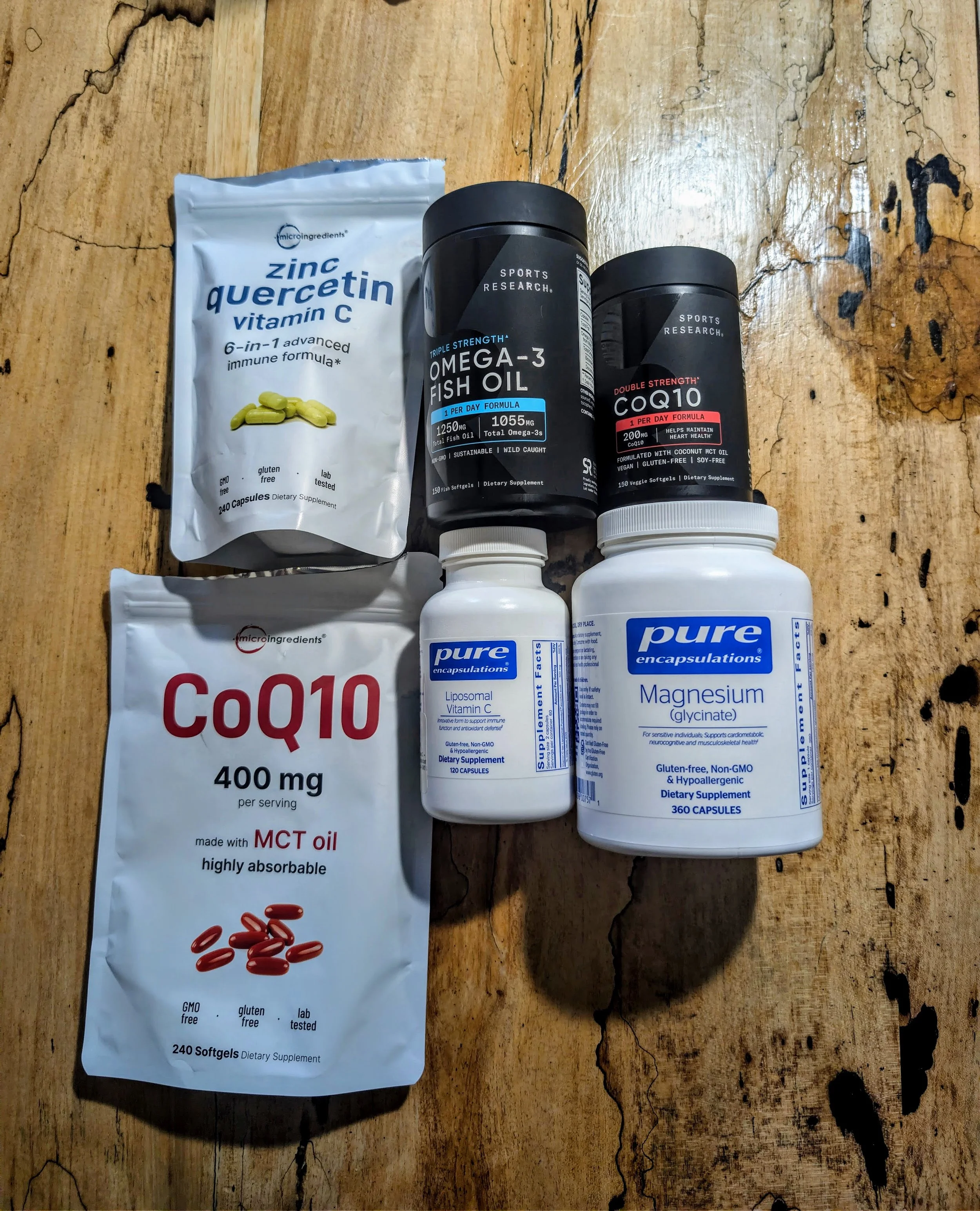
My daily IM8 baseline provides a steady 100mg payload of Coenzyme Q10 (CoQ10). For a standard human chassis operating under normal conditions, 100mg is highly sufficient. I, however, am managing a system diagnosed with Systemic Lupus Erythematosus (SLE).
When you strip away the medical jargon, Lupus is fundamentally a systemic autoimmune misfire characterized by profound mitochondrial dysfunction. The mitochondria are the microscopic power plants inside your cells. In a Lupus-afflicted system, these power plants are physically damaged. The inner membrane of the mitochondria houses the Electron Transport Chain (ETC)—a complex series of proteins that generate ATP.
Because of the autoimmune damage, my Electron Transport Chain is highly prone to stuttering and failing. When it fails, it leaks an excessive amount of electrons into the cell, generating a massive surge of Reactive Oxygen Species (ROS). This ROS leakage is essentially internal cellular rust. It triggers a vicious cycle: the rust causes systemic inflammation, the inflammation causes devastating, heavy-limbed fatigue, and the fatigue further damages the mitochondria.
The Mechanical Solution:
To counteract this, I deploy an aggressive, targeted supplemental dose of 400mg of CoQ10 directly on top of my baseline, bringing my total daily systemic intake to 500mg.
CoQ10 is not a luxury vitamin; it is an absolute mechanical necessity for this exact pathophysiology. It serves two distinct, critical functions in the damaged engine:
The Spark Plug: CoQ10 is a vital electron carrier within the mitochondrial membrane. By flooding the engine block with 400mg of highly bioavailable CoQ10, I am providing the raw chemical material necessary to force the failing Electron Transport Chain to keep firing, sustaining ATP production despite the structural damage.
The Radical Scavenger: Because CoQ10 is a potent, lipophilic (fat-soluble) antioxidant, it acts as a deep-tissue solvent. It actively hunts down the leaking Reactive Oxygen Species and neutralizes them before they can trigger the inflammatory alarm bells in the immune system.
It is the biological equivalent of running a high-grade synthetic oil in an overheating engine. It reduces the cellular friction, mitigates the systemic fatigue crashes, and forces a damaged system to maintain a high-performance output.
4.0 Structural Lubrication: High-Yield Fish Oil (1,250mg)
If you have spent ten years on a commercial butchery line and follow it up with a career as a field technician, your load-bearing joints have accumulated serious mechanical mileage. When you combine that sheer physical wear-and-tear with an autoimmune condition that specifically targets the articular surfaces, systemic joint lubrication is mandatory.
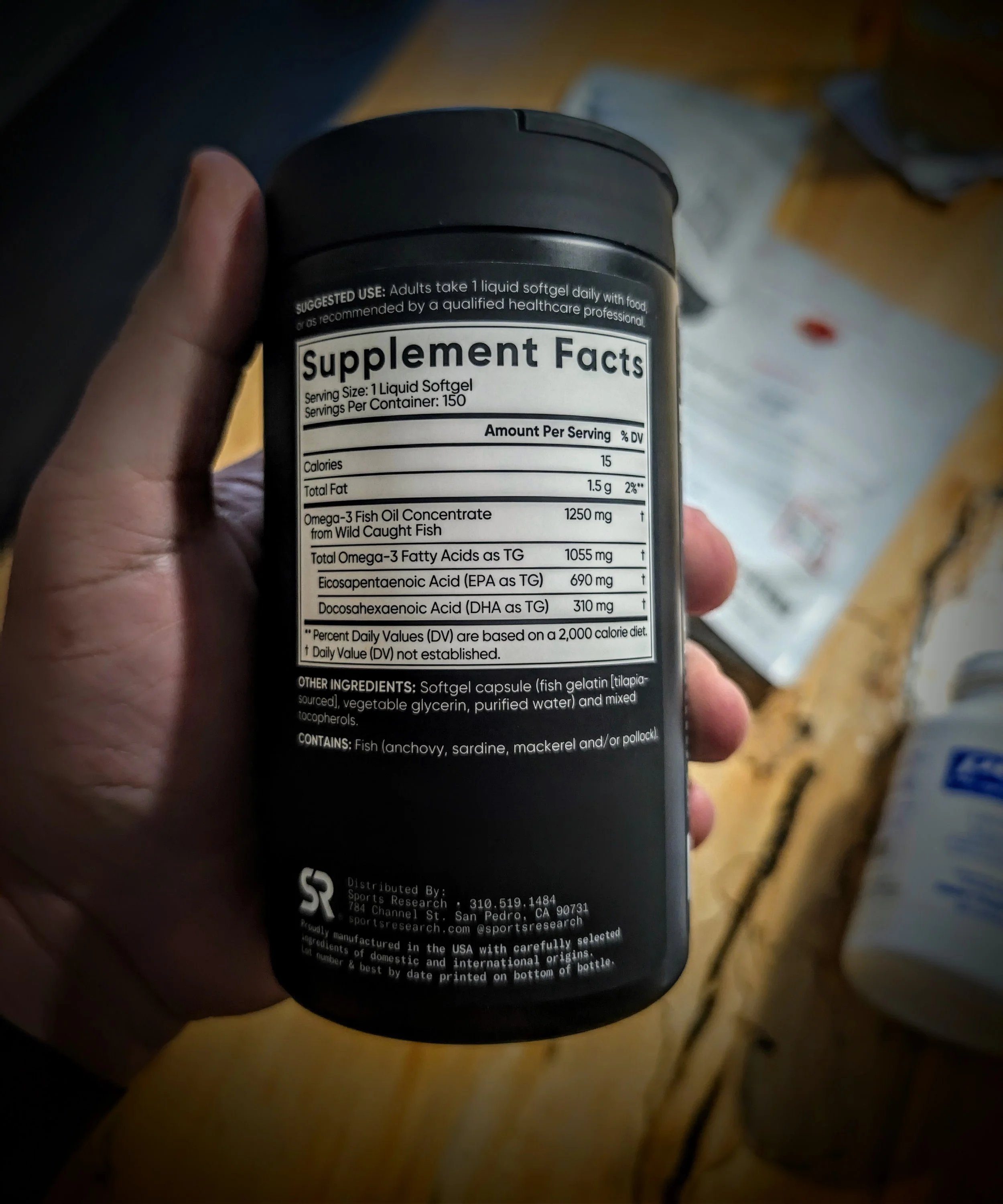
I run a strict daily payload of 1,250mg of high-quality Omega-3 fish oil.
This is not about joint "health" in a vague, holistic sense; it is about manipulating lipid biology to downregulate inflammation. Omega-3 fatty acids, specifically Eicosapentaenoic Acid (EPA) and Docosahexaenoic Acid (DHA), physically integrate themselves into the phospholipid bilayer of your cellular membranes.
When your immune system goes on the attack, it synthesizes pro-inflammatory signaling molecules from the fats stored in your cells. If your cells are packed with low-grade Omega-6 fatty acids (found in cheap industrial seed oils), the resulting inflammation is violent and destructive. As a structural rule, I aggressively limit industrial seed oil intake—a dietary and sourcing protocol I will detail thoroughly in upcoming dispatches under the "The Larder" pillar.
If, however, you have saturated your cellular membranes with high-yield EPA and DHA from fish oil, the body uses those fats to synthesize "resolvins" and "protectins"—specialized molecules that act as chemical fire retardants, actively shutting down the inflammatory cascade at the cellular level.
The 1,250mg dose ensures my cell membranes remain highly fluid and perfectly lubricated, preventing the mechanical stiffness and heat that characterize joint failure.
5.0 The Biological Threat Protocol: Zinc, Quercetin, & Vitamin C
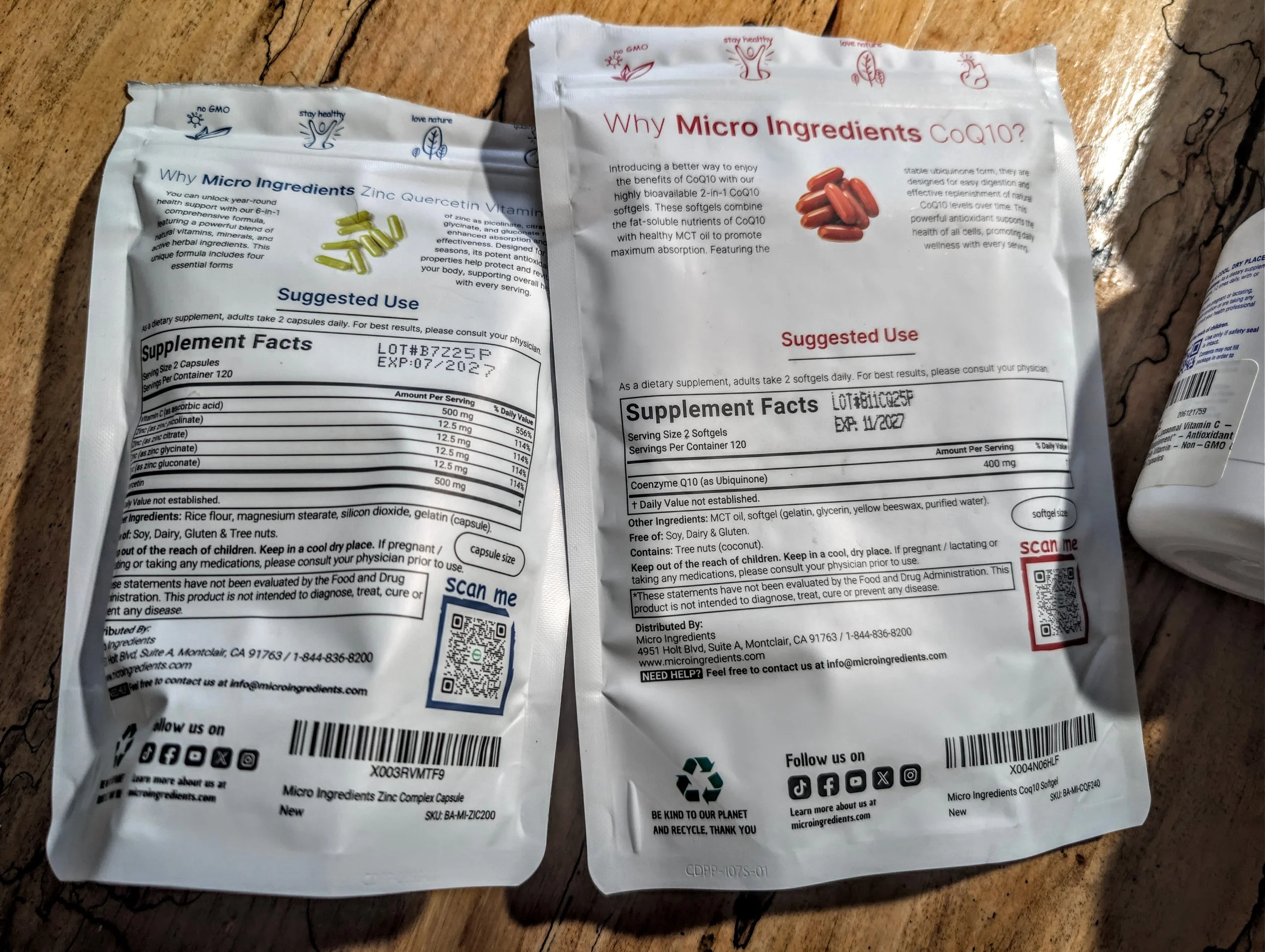
the Micro Ingredients Zinc Complex shown on the left, the formula contains five distinct types of zinc included for their specific absorption properties: zinc picolinate, zinc citrate, zinc glycinate, zinc gluconate, and zinc monomethionine. This complex is designed to provide varied and optimal zinc utilization in the body.
Unlike the previous compounds, I do not run heavy, isolated doses of these inputs on a daily basis. Standard baseline nutrition handles my daily requirements. Over-supplementing isolated minerals is a dangerous game of biological whack-a-mole; chronically high doses of Zinc, for instance, will aggressively strip Copper from your system, creating an entirely new structural failure.
This protocol is purely tactical. It is deployed strictly when a biological threat vector enters the perimeter—which, with two young children in the house, is a frequent occurrence.
When my family exhibits symptoms of a viral or bacterial infection, my immediate objective is to heavily fortify the primary immune defense grid to prevent systemic downtime.
The Zinc & Quercetin Stack: Zinc is the ultimate intracellular signaling molecule for the immune system. It physically controls the development and activation of T-lymphocytes (the body's hunter-killer cells) and actively interrupts viral replication. However, Zinc is a positively charged ion; it has a notoriously difficult time piercing the cellular membrane on its own. That is why it must be paired with Quercetin. Mechanically, Quercetin acts as a zinc ionophore—it essentially opens a structural channel in the cell wall, allowing the Zinc payload to bypass the barrier and flood directly into the interior of the cell where it is needed most. I typically utilize a specialized complex (frequently sourcing from Micro Ingredients) to execute this combined payload.
Ascorbic Acid (Vitamin C): Deployed in tandem, Vitamin C acts as a massive antioxidant shield. During an immune response, white blood cells generate heavy amounts of oxidative stress to destroy pathogens. Vitamin C protects the surrounding healthy tissue from collateral damage during the firefight.
Once the threat is neutralized and the household returns to standard operating procedures, this tactical stack is immediately shelved.
6.0 The Nighttime Down-Regulation Sequence
You cannot run a high-torque mechanical system at the redline for fifteen hours a day and expect it to instantly power down the moment you turn the key. The central nervous system requires active, chemical deceleration to transition from a sympathetic (fight-or-flight) state into a parasympathetic (rest-and-digest) recovery cycle.
To execute this transition, I run a highly specific two-part sequence approximately forty-five minutes before sleep.
Component 1: Liposomal Vitamin C (500mg)
Taking standard ascorbic acid at night is a tactical error; it is highly acidic and can cause significant gastrointestinal friction, disrupting sleep architecture. I utilize a 500mg Liposomal delivery system.
In a liposomal formulation, the Vitamin C payload is encapsulated within a microscopic lipid (fat) sphere. This lipid bilayer mimics the exact structure of human cell membranes. When ingested, it completely bypasses the harsh digestive enzymes in the stomach and absorbs directly into the bloodstream at a vastly higher efficiency rate. Nighttime is when the body executes deep-tissue repair and collagen synthesis—processes that require heavy amounts of Vitamin C. By delivering a highly bioavailable liposomal payload directly to the cells while I sleep, I am providing the exact raw materials required for structural repair while simultaneously regulating overnight cortisol levels.
Component 2: Magnesium Bisglycinate (120mg)
Magnesium is the master governor of the human body, responsible for over 300 distinct enzymatic reactions. However, standard commercial magnesium (like magnesium oxide) is virtually useless; it is poorly absorbed and acts primarily as a cheap laxative.
To downregulate the central nervous system, I deploy 120mg of Magnesium Bisglycinate. This specific chelate binds the elemental magnesium to two molecules of the amino acid glycine.
This combination is mechanically flawless for sleep induction. The magnesium acts as a physical block on the NMDA receptors in the brain, preventing the influx of calcium that causes nervous system excitation. Simultaneously, the glycine molecules act as potent inhibitory neurotransmitters. They lower the core temperature of the body and actively quiet the electrical firing of the brain. The combination forces the chassis out of high gear and drops it directly into a deep, highly restorative recovery cycle.
7.0 Sourcing Parameters and Brand Agnosticism
If you have read my teardowns on heavy metal cookware or technical apparel, you understand that I harbor absolutely zero brand loyalty. A logo is a marketing construct. I hold loyalty only to the spec sheet, the metallurgy, and the manufacturing process.
The exact same philosophy applies to my biological inputs.
I do not care what color the bottle is, and I do not care which influencer is holding it. I evaluate supplement manufacturers based on rigorous, highly technical tolerances: open-source transparency, third-party testing for heavy metals and oxidation, the explicit absence of synthetic flow agents (like magnesium stearate), and the utilization of clinically proven, bioactive chemical forms.
Currently, there are a handful of manufacturers that consistently meet these uncompromising standards.
Pure Encapsulations: They operate with a level of hypoallergenic, zero-filler manufacturing that mimics a pharmaceutical cleanroom.
Micro Ingredients: A highly reliable source for bulk, unadulterated, single-ingredient powders and complexes.
Sports Research: They consistently provide highly verified, third-party tested lipid formulations (specifically for Fish Oil).
Thorne: Long considered the gold standard in clinical-grade manufacturing, they refuse to utilize proprietary blends or substandard chemical forms.
As long as a brand operates with strict transparency and their lab assays verify their material claims, I will utilize their hardware. The moment a company alters their formulation to cut costs, obfuscates their ingredient list behind a "blend," or fails a heavy metal test, they are immediately and permanently removed from the supply chain.
8.0 Final Calibration
Building a resilient physical chassis is not a static process; it is an active, daily calibration.
The baseline fuel keeps the engine running, but true durability requires the capacity to troubleshoot in real time. By keeping modular, highly specific tools in reserve—adjusting ATP buffers based on telemetry, pushing ionophores to halt viral threats, and forcefully downregulating an overactive nervous system—you transition from being a passive passenger in your own body to an active technician.
Verify your own data. Monitor your operational output. When the system begins to grind, do not accept the friction as an inevitable consequence of aging or stress. Open the manual, identify the failure point, and deploy the precise mechanical intervention required to bring the machinery back online.
