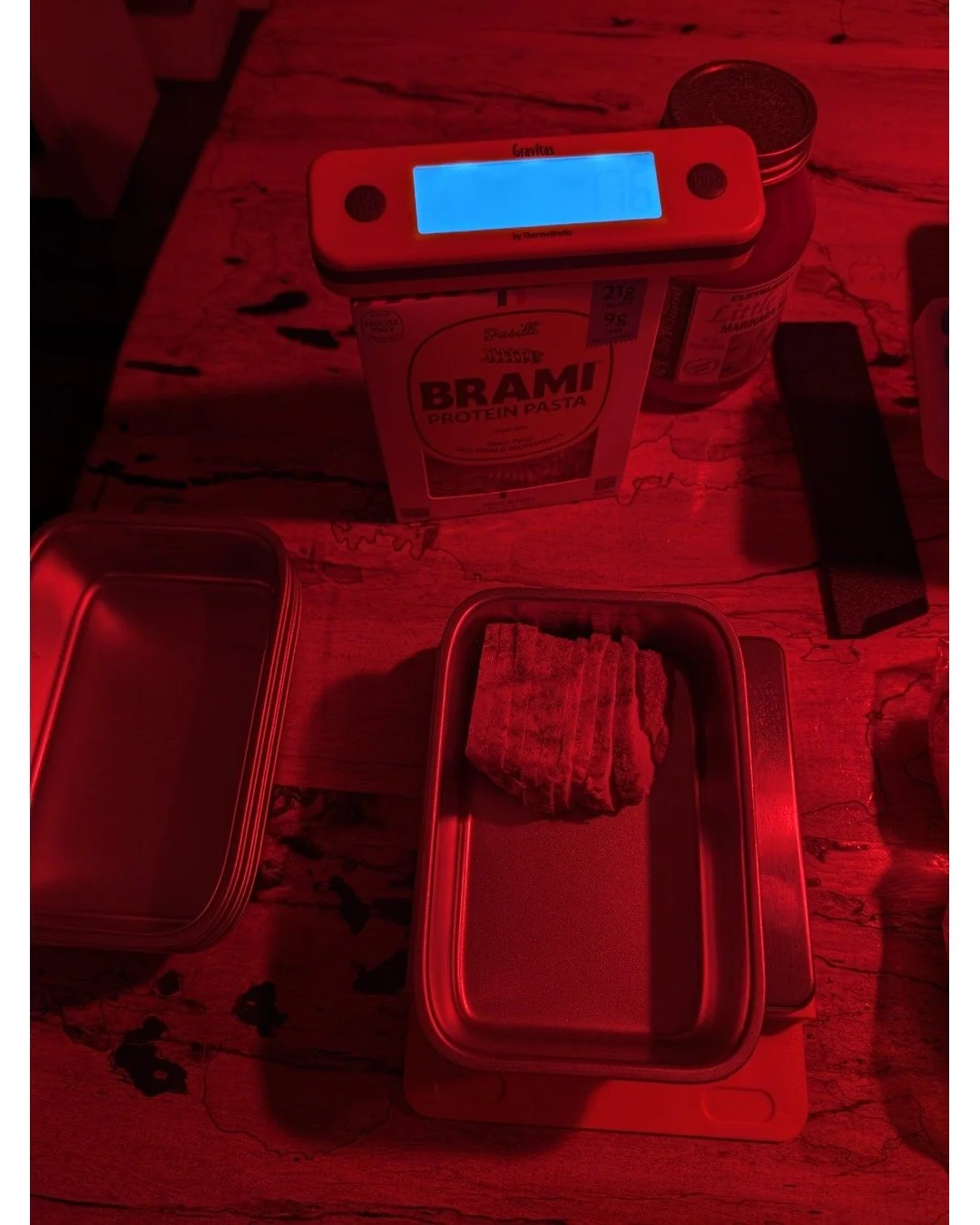
ThermoWorks made its name on temperature. The Thermapen is the default answer to a straightforward question about instant-read thermometers, and the company built that standing on one thing: a specification backed by calibration paperwork. The Gravitas is ThermoWorks applying the same logic to weight. It is the company's first scale, and it is not a cheap kitchen scale with a familiar logo on it. It is a precision instrument that happens to sit on a countertop, and it is priced like one: $119.
That price is the first thing to get out of the way, because it decides who this scale is for. A $20 scale weighs flour. It does it to the nearest gram, which is fine for most baking, and it fails in exactly the ways cheap scales fail: the display disappears under a big bowl, the reading drifts, and you replace it in a year. The Gravitas is built around the opposite problem. It assumes you already care about tenths of a gram, and it spends its money on the parts that make tenths of a gram usable in a real kitchen.
THE HEADLINE NUMBERS
Taken straight from ThermoWorks: Resolution: 0.1 g / 0.001 oz. Accuracy: ±0.7 g or better from 0 to 1,000 g; ±1 g / 0.1% from 1,001 to 5,000 g. Capacity: up to 11 lb / 5 kg. Display: fully wireless, removable, backlit, 180-gree o-rotating, with integrated magnets. Memory: 20 minutes total - 5 minutes active, then 15 minutes in standby remembering the last reading. Build: IP66 rated, removable stainless steel platform. Power: display 2 x AA (350 hours), base 4 x AA (300 hours). Calibration: NIST-traceable certificate included. Display refresh: 0.5 seconds.
WHY THE DISPLAY MATTERS MORE THAN THE RESOLUTION
Most kitchen scales have a fixed display, and most kitchen work involves a bowl that is bigger than the scale. The display ends up hidden behind the bowl, or you end up crouching to read it, or you tilt the whole thing and disturb the reading. The Gravitas fixes that by removing the display entirely. It is a separate, wireless unit that you can pull off the base and put where you can see it - propped on a box, stuck to a fridge with its magnets, held in your hand while you pour. The display rotates 180 degrees on its own, so it reads upright from either side, and it is backlit, which matters at night in the same way a backlit thermometer display matters. The wireless link is 2.4 GHz RF, not Bluetooth and not Wi-Fi. That is a deliberate choice, and a good one for a kitchen tool: there is nothing to pair, no app to open, no phone in the middle of the measurement. You turn it on and it talks to the base. The trade-off, stated plainly below, is that you now have two pieces to keep track of instead of one.
WHAT ±0.7 G ACTUALLY COVERS
Accuracy figures are easy to inflate, so the fine print matters here, as it did with the Thermapen. ThermoWorks rates the Gravitas at ±0.7 g or better, but only from 0 to 1,000 g. Above 1,000 g, up to the 5,000 g capacity, the rating relaxes to ±1 g or 0.1% of the reading. Read honestly, the tight tolerance covers the range where tenths of a gram actually matter - coffee dosing, bread and pastry work, small-batch portioning - and the looser tolerance covers bulk weighing, where a gram either way is noise. Each unit ships with a NIST-traceable calibration certificate. That means the scale was verified against a reference that chains back, through documented steps, to a national standard. For a home cook, that is reassurance. For anyone developing recipes, portioning for sale, or doing sausage and charcuterie work where salt percentages are not a suggestion, it is paperwork that means something. The 0.1 g resolution deserves the same honest reading. Resolution is not accuracy. A display that shows tenths of a gram is not the same as a scale that is accurate to a tenth of a gram, and ThermoWorks does not claim otherwise - the accuracy figure is ±0.7 g. What the fine resolution does give you is a stable, readable number when you are adding yeast, salt, or coffee a little at a time, instead of a display that jumps in whole grams and leaves you guessing whether you added 0.4 g or 0.9 g.
THE 20-MINUTE MEMORY, TRANSLATED
The Gravitas stays active for five minutes after the last weight change, then goes into standby for fifteen minutes, remembering the last reading, then shuts off. Twenty minutes total. In practice that means you can tare a bowl, walk away to fetch an ingredient, come back, and still see what you had. It is a small feature, and it is the kind of small feature that separates a tool designed by people who cook from a tool designed to a price point. It is not a timer, and it is not a recipe app - it just does not forget while you are still using it. BUILD AND POWER - IP66 means dust-tight and protected against powerful water jets. It is not IP67 - this is not a scale you submerge. It is a scale you can wipe down, use with wet hands, and clean without worrying about the electronics. The stainless platform lifts off for hand washing, which is the part that actually gets dirty. Power is six AA batteries in total: two in the display, four in the base. Rated life is 350 hours for the display and 300 hours for the base. That is a lot of weighing, and it is also a reminder that this scale has two battery compartments to watch, not one. There is no rechargeable battery, no USB charging - a deliberate simplicity, and a minor ongoing cost.
THE HONEST DRAWBACKS
Four things worth saying plainly. First, the price. At $119, the Gravitas is serious money for a scale, and it is fair to ask whether a $20 scale does the job. For most weeknight cooking, it does. The Gravitas earns its price only if you actually use the resolution, the wireless display, and the calibration - if you weigh coffee to the tenth, bake by weight, or portion precisely. Otherwise it is an expensive way to weigh flour. Second, the two-piece design is both the best feature and a liability. A removable display is wonderful until it is in another room, on top of the fridge, or in a drawer. If you lose it, or its batteries die separately from the base, the scale is a very expensive platform. ThermoWorks mitigates this with magnets and a dock on the base, but the risk is real and it is inherent to the design. Third, the accuracy headline needs its footnote, as above. ±0.7 g covers 0 to 1,000 g. Above that it is ±1 g / 0.1%. That is still good, but anyone buying this scale for bulk work should know the number before they buy, not after. Fourth, the display refresh is 0.5 seconds. That is fine for pouring and portioning, and it is not the instant response of a Thermapen. If you are expecting a live, flickering readout as you pour, you will notice the half-second step. Most users will stop noticing it in a day. It is still a limit worth naming on a precision tool.
VERDICT
The Gravitas earns its standing the same way ThermoWorks' thermometers did: a specification backed by calibration paperwork, a design decision - the wireless display - that solves a real kitchen problem instead of adding a feature, and a build that is sealed and serviceable where it counts. It has a premium price, a two-piece design you have to live with, and an accuracy figure with a footnote. At $119, it is not the scale for everyone. For anyone who already weighs to the tenth of a gram and is tired of reading a display hidden behind a bowl, it is the easiest recommendation in its category.
Find the Gravitas at ThermoWorks.
Next read: the Thermapen ONE teardown, the instrument that made ThermoWorks’ name in temperature.
Get The Teardown, Weekly — one email a week with the newest teardown and one older piece worth a second look. No spam, unsubscribe anytime.